
Low-VOC and Eco-Friendly Decorative Films for Green Building Projects in UAE and Saudi Arabia
- Dora

- Nov 27
- 8 min read
In the United Arab Emirates and Saudi Arabia, green building has moved from a niche concept to a regulatory and commercial reality. Dubai’s Green Building Regulations (Al Sa’fat) have been mandatory for new buildings since 2014, and thousands of projects now follow these standards to reduce energy use and environmental impact. Across the UAE, green building frameworks such as Estidama and emirate-level regulations emphasize indoor environmental quality, including the use of low-emission materials. In Saudi Arabia, the Mostadam green building system supports Vision 2030 by promoting sustainable development and better occupant well-being, with credits that specifically encourage low-VOC materials.
Within this regulatory context, interior finishes are under closer scrutiny than ever. Developers, consultants, and fit-out contractors need surface materials that combine visual quality, durability, and compliance with low-emitting material requirements. Low-VOC and eco-friendly decorative films are becoming a strategic choice for doors, furniture, wall panels, and metal substrates in UAE and Saudi Arabia green building projects. This article explains how such solutions support Estidama, Al Sa’fat, LEED, and Mostadam objectives, and how B2B partners can use them to differentiate their offerings.
Green building frameworks and the role of low-VOC materials
The UAE’s green building landscape is shaped by multiple systems, including the Estidama Pearl Rating System in Abu Dhabi and Al Sa’fat in Dubai. Estidama integrates mandatory and optional credits around energy, water, materials, and indoor environmental quality, requiring designers to prioritize sustainable materials and healthy interiors. UAE green building standards more broadly highlight low-emission materials and adequate ventilation as key levers for better indoor air quality and occupant comfort.
Dubai Municipality’s Green Building Regulations, reissued as Al Sa’fat, set mandatory requirements for all new buildings from 2014 onwards. These requirements influence the full supply chain: architects and consultants specify compliant materials; contractors and fit-out firms must install them; and material suppliers must provide documentation and test data.
In Saudi Arabia, the Mostadam green building system, developed under the Ministry of Housing and aligned with Vision 2030, offers rating levels designed for local climate and sustainability priorities. Credits related to indoor environmental quality typically reward the use of low-VOC finishes, adhesives, and coatings, helping projects create healthier indoor spaces and improve certification scores.
International frameworks such as LEED v4.1 reinforce this trend. LEED’s low-emitting materials credits cover adhesives, sealants, paints, coatings, flooring, and other interior products, requiring both VOC content and emissions testing. For multinational clients and regional developers benchmarking against LEED, having decorative films that support these credits is commercially valuable, especially for hospitality, healthcare, and high-end residential projects throughout the Gulf.

What are low-VOC and Eco-friendly decorative films?
Decorative films are thin surface materials, typically based on PVC or other polymers, that are laminated or wrapped onto substrates such as MDF, HDF, particleboard, metal, or rigid plastics. They provide the visible finish—woodgrain, stone, solid color, super-matte, or high-gloss—while protecting the underlying board. For UAE and Saudi Arabia, common applications include interior doors, wardrobes, kitchen cabinets, wall panels, hotel furniture, and steel or aluminum doors.
A low-VOC and eco-friendly decorative film solution is not just about the film itself. It is an integrated system that considers:
VOC emissions from the printed and coated film.
VOC content and emissions of any adhesives used during lamination, wrapping, or membrane pressing.
The presence or absence of restricted substances, such as certain plasticizers or heavy metals, in line with international standards.
The overall lifecycle impact, including durability and resistance to yellowing, so that surfaces do not require frequent replacement.
In practice, low-VOC and eco-friendly decorative films are engineered with carefully selected resins, plasticizers, inks, and topcoats. They undergo emissions or content testing against criteria used in LEED, local UAE technical guides, and similar benchmarks, while also meeting performance requirements such as scratch resistance, stain resistance, and dimensional stability in air-conditioned, high-temperature Gulf environments.
For B2B customers—panel producers, door manufacturers, furniture factories, and distributors—this means a surface solution that aligns with both project compliance and end-user expectations for air quality and sustainability.

Why low-VOC decorative films matter for Estidama, Al Sa’fat, LEED, and Mostadam
Within green building rating systems, indoor environmental quality is a pillar alongside energy and water. Estidama, Al Sa’fat, UAE green building standards, LEED, and Mostadam all recognize that finishes and adhesives significantly influence indoor air quality.
Low-VOC and eco-friendly decorative films can support these systems in several ways. First, they reduce the amount of wet paint and solvent-based coatings applied on site, replacing them with factory-finished surfaces. This directly lowers VOC emissions during construction and early occupancy. Second, when paired with low-VOC adhesives and tested in accordance with schemes referenced by LEED and local regulators, decorative film systems help projects meet low-emitting materials credits without compromising design flexibility.
In UAE and Saudi Arabia, where many projects combine local and international rating systems, a single compliant decorative film portfolio allows developers and contractors to simplify specification, streamline documentation, and avoid last-minute substitutions. For distributors, stocking low-VOC and eco-friendly decorative films means being able to supply multiple project types—from residential towers and malls to hospitals and schools—under the same trusted surface solution.
Performance requirements in Gulf climates
Green building in UAE and Saudi Arabia is shaped by climate. High temperatures, strong solar radiation, and heavy reliance on air-conditioning create particular stresses on interior finishes. A low-VOC and eco-friendly decorative film designed for these markets should therefore be evaluated on more than just VOC metrics.
Dimensional stability helps prevent bubbling, cracking, or seam opening when substrates move with temperature changes. Anti-yellowing and UV resistance protect light colors and white tones from discoloration under intense light exposure common in Gulf interiors. Scratch and stain resistance keep high-traffic surfaces—doors, wardrobes, reception desks—looking new even with daily wear, extending service life and reducing waste.
From a compliance perspective, certain project types such as hotels and hospitals may require additional performance, including fire behavior in line with local codes or specific client standards. While decorative films themselves are only one part of the assembly, using solutions with tested performance and clear technical data sheets simplifies coordination with consultants and authorities.
For Giwett as a specialized decorative film brand, sustained investment in base films and surface treatments is focused precisely on these dimensions: scratch resistance, stain resistance, anti-yellowing, and dimensional stability. This application-driven approach ensures that low-VOC and eco-friendly decorative films can withstand both everyday use and the demanding climate conditions typical of UAE and Saudi projects.
Comparing decorative options for green building projects
Developers, joinery factories, and distributors often have to choose between multiple surface options for doors and furniture, including on-site paint, HPL laminates, and decorative films. The following table summarizes typical differences from a green building and operational perspective.
Surface option | VOC and indoor air impact | Installation and site disruption | Design flexibility | Typical suitability for green building projects |
On-site solvent-based paint | High VOC during application and curing | Wet trades, longer drying time, odor complaints | Flexible colors but limited textures | Challenging without low-VOC formulations |
On-site water-based low-VOC paint | Lower VOC but still on-site emissions | Requires careful site control and curing | Good colors, limited to paint aesthetics | Better, but documentation still needed |
HPL laminate | Manufactured off site; adhesives can add VOC | CNC and pressing, edges require extra steps | Decent range; thickness and edges visible | Suitable if adhesives and substrates are compliant |
Standard decorative film | Factory finished; VOC profile depends on formulation | Can reduce on-site coating, but may lack low-VOC documentation | Wide range of woodgrain, stone, solid colors | Variable; may not support all rating credits |
Low-VOC and eco-friendly decorative films | Formulated and tested for low VOC; supports IAQ | Off-site finishing or controlled fabrication; minimal odor on site | Extensive textures, gloss levels, and prints | Well suited, especially when backed by test reports and documentation |
This comparison reveals why low-VOC and eco-friendly decorative films are attractive for UAE and Saudi Arabia green building projects. They combine the design freedom of advanced printing and embossing with the documentation and performance needed for green certifications.
How UAE and Saudi distributors can build a competitive portfolio
For distributors and agents serving the Middle East, stocking low-VOC and eco-friendly decorative films is both a compliance strategy and a business opportunity. Many project specifications now require evidence of low-emitting materials, and regional consultants are increasingly familiar with LEED, Estidama, and Mostadam criteria.
By curating a range of decorative films that are already tested for VOC content or emissions, distributors can position themselves as solution providers rather than simply product suppliers. They can respond to questions such as:
Whether the decorative film and adhesive system can support low-emitting materials credits.
How the solution performs in terms of scratch resistance, stain resistance, and yellowing.
What documentation—test reports, technical data sheets, declarations—is available for submission to consultants and authorities.
Because low-VOC and eco-friendly decorative films are suitable for multiple substrates, one portfolio can address interior doors, wardrobe and kitchen fronts, wall cladding, and even steel or aluminum doors that would otherwise rely on powder coating or spray paint. This simplifies warehouse management and speeds up project response.
Selecting the right manufacturing partner
The value of low-VOC and eco-friendly decorative films depends heavily on the capabilities of the manufacturer behind them. A partner focused exclusively on decorative films, such as Giwett, can align product development with real applications rather than generic formulations.
Giwett builds its portfolio on consistent investment in base films and surface treatments, ensuring that mechanical properties—scratch resistance, stain resistance, anti-yellowing, and dimensional stability—are embedded from the start. The company follows an application-driven development philosophy, adjusting film thickness, gloss level, embossing, and surface chemistry to match specific process routes such as profile wrapping, flat lamination, or membrane pressing. This shortens ramp-up time for factories and reduces total process cost.
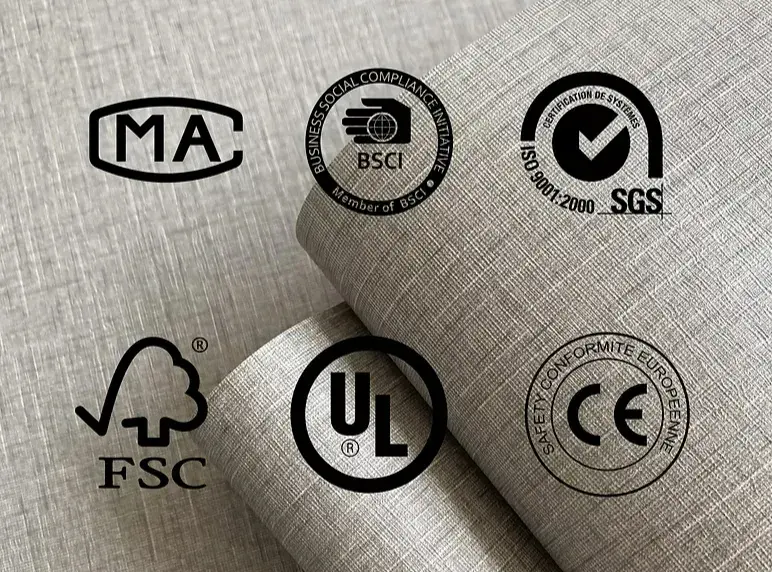
Quality and compliance form the foundation of Giwett’s long-term operations. Products are designed with traceability and verification in mind, allowing samples to be matched to mass production in a repeatable way and helping clients meet entry standards across different markets and channels. For distributors and project clients in UAE and Saudi Arabia, this translates into fewer surprises on site and smoother interactions with consultants and certification bodies.
In delivery, Giwett balances flexibility and efficiency, supporting practical minimum order quantities and rational lead times while maintaining the consistency needed for replenishment and cross-series extensions. For OEM and ODM customers, the company offers collaborative design and engineering support, co-developing decors and providing merchandising assistance at the point of sale. This combination of technical rigor and market understanding helps B2B partners turn every surface upgrade into measurable business value.

Conclusion: turning compliance into commercial advantage
As UAE and Saudi Arabia accelerate the adoption of green building standards such as Estidama, Al Sa’fat, LEED, and Mostadam, low-emitting interior materials are no longer optional. Low-VOC and eco-friendly decorative films provide a practical route to meeting indoor air quality and material credits while enhancing design flexibility and operational efficiency.
For developers and consultants, specifying these solutions reduces the risk of last-minute substitutions and strengthens the sustainability narrative of their projects. For factories and distributors, a well-documented portfolio of low-VOC and eco-friendly decorative films opens doors to high-value hospitality, residential, healthcare, and commercial projects across the region.
By partnering with a specialized decorative film manufacturer like Giwett, stakeholders in UAE and Saudi Arabia can align technical performance, regulatory compliance, and design innovation—turning regulatory requirements into a clear competitive edge in the green building market.
FAQ: Low-VOC and Eco-Friendly Decorative Films in UAE and Saudi Arabia
Q1. Can low-VOC and eco-friendly decorative films help my project earn green building credits?Yes. When combined with low-VOC adhesives and supported by appropriate test reports, low-VOC and eco-friendly decorative films can contribute to indoor environmental quality credits under systems such as LEED, Estidama, Al Sa’fat, and Mostadam by reducing VOC emissions from interior finishes and improving indoor air quality.
Q2. Are these films suitable for both new construction and renovation in the Gulf region?They are well suited to both. For new construction, low-VOC and eco-friendly decorative films help meet regulatory requirements and green building standards. For renovation, they enable fast surface upgrades with minimal odor and site disruption, particularly valuable in occupied hotels, offices, and residential towers in UAE and Saudi Arabia.


Comments